" width="160.0000032707046px"><path d="M 0 39.788 L 15.471 39.788 L 15.471 26.455 L 28.822 39.788 L 39.841 39.788 L 39.841 28.781 L 26.49 15.448 L 39.841 15.448 L 39.841 0.001 L 0 0.001 Z M 52.345 0.211 L 51.073 0.211 L 51.073 6.772 L 52.345 6.772 L 52.345 0.212 Z M 68.238 6.561 L 69.511 6.561 L 69.511 1.271 L 71.205 1.271 L 71.205 0.212 L 66.543 0.212 L 66.543 1.271 L 68.239 1.271 L 68.239 6.562 Z M 58.49 2.117 L 61.245 6.562 L 62.304 6.562 L 62.304 0.212 L 61.033 0.212 L 61.245 4.657 L 58.491 0.212 L 57.218 0.212 L 57.218 6.562 L 58.49 6.562 Z M 55.1 38.095 C 54.888 38.518 54.251 38.73 53.827 38.73 C 52.768 38.73 51.921 37.883 51.921 36.401 C 51.921 34.92 52.557 34.073 53.616 34.073 C 54.04 34.073 54.465 34.285 54.888 34.708 C 55.1 34.92 55.1 35.132 55.1 35.343 L 56.372 34.92 C 56.16 33.65 54.888 32.803 53.615 33.014 L 53.192 33.014 C 51.497 33.226 50.226 34.708 50.438 36.402 L 50.438 36.825 C 50.438 38.517 51.709 40 53.404 40 C 54.253 40 55.1 39.576 55.735 38.941 C 55.947 38.729 56.159 38.305 56.371 37.883 L 55.311 37.459 C 55.311 37.671 55.1 37.883 55.1 38.094 Z M 129.696 6.772 L 129.907 6.772 C 131.602 6.561 132.875 5.079 132.663 3.387 L 132.663 3.175 C 132.875 1.482 131.391 0 129.696 0 L 129.484 0 C 127.789 0.212 126.305 1.693 126.516 3.387 C 126.516 4.233 126.728 5.079 127.364 5.715 C 128.001 6.562 128.848 6.773 129.696 6.773 Z M 129.696 1.058 C 130.967 1.058 131.602 2.328 131.602 3.598 L 131.602 3.81 C 131.604 4.316 131.404 4.801 131.047 5.16 C 130.689 5.518 130.202 5.718 129.696 5.715 C 128.636 5.715 127.789 4.867 127.789 3.387 C 127.789 2.116 128.636 1.058 129.696 1.058 Z M 138.384 2.117 L 141.139 6.562 L 142.199 6.562 L 142.199 0.212 L 140.927 0.212 L 141.139 4.657 L 138.173 0.212 L 137.112 0.212 L 137.112 6.562 L 138.384 6.562 Z M 160 24.973 L 150.675 24.973 L 150.675 21.375 L 158.517 21.375 L 158.517 17.566 L 150.675 17.566 L 150.675 15.026 L 159.152 15.026 L 159.152 11.006 L 145.166 11.006 L 145.166 28.784 L 160 28.784 L 160 24.972 Z M 147.921 5.292 L 150.463 5.292 L 150.887 6.562 L 152.159 6.562 L 150.04 0 L 148.345 0 L 146.225 6.561 L 147.497 6.561 Z M 149.191 1.27 L 150.04 4.233 L 148.344 4.233 Z M 80.318 5.503 L 76.503 5.503 L 76.503 3.81 L 79.682 3.81 L 79.682 2.752 L 76.503 2.752 L 76.503 1.271 L 80.106 1.271 L 80.106 0.214 L 75.444 0.214 L 75.444 6.564 L 80.318 6.564 L 80.318 5.502 Z M 122.278 0.212 L 121.006 0.212 L 121.006 6.772 L 122.278 6.772 Z M 95.576 2.117 L 98.331 6.562 L 99.392 6.562 L 99.392 0.212 L 98.119 0.212 L 98.331 4.657 L 95.364 0.212 L 94.304 0.212 L 94.304 6.562 L 95.577 6.562 Z M 113.802 6.562 L 115.073 6.562 L 115.073 1.271 L 116.768 1.271 L 116.768 0.212 L 111.894 0.212 L 111.894 1.271 L 113.802 1.271 L 113.802 6.562 Z M 109.138 33.228 L 107.867 33.228 L 107.867 39.788 L 109.138 39.788 L 109.138 33.227 Z M 136.476 11.005 L 136.476 22.01 C 136.476 22.857 136.265 23.492 135.841 24.127 C 135.417 24.55 134.781 24.762 134.146 24.762 C 133.51 24.762 132.875 24.55 132.45 24.127 C 132.026 23.491 131.602 22.856 131.814 22.01 L 131.814 11.006 L 126.304 11.006 L 126.304 21.586 C 126.092 23.704 126.728 25.608 128.212 27.089 C 129.907 28.572 132.238 29.206 134.358 29.206 C 136.476 29.206 138.808 28.57 140.503 27.089 C 142.199 25.184 142.835 22.857 142.623 20.529 L 142.623 11.006 L 136.476 11.006 Z M 107.867 6.561 L 109.138 6.561 L 107.02 0 L 105.537 0 L 103.417 6.561 L 104.689 6.561 L 105.113 5.29 L 107.655 5.29 Z M 105.325 4.233 L 106.172 1.27 L 107.232 4.233 Z M 115.497 24.761 C 112.741 24.761 111.682 22.222 111.682 19.681 C 111.682 18.2 112.106 16.719 112.953 15.661 C 113.589 15.026 114.437 14.814 115.497 14.814 C 117.192 14.814 118.676 16.085 119.1 17.777 L 123.762 15.45 C 123.338 14.602 122.913 13.967 122.278 13.333 C 120.371 11.428 117.827 10.371 115.285 10.371 L 114.861 10.371 C 109.563 10.582 105.748 15.026 105.96 19.894 L 105.96 20.74 C 106.172 25.608 110.199 29.418 115.073 29.206 C 117.615 29.206 120.159 28.359 121.854 26.666 C 122.585 25.942 123.162 25.078 123.55 24.126 L 118.888 21.798 C 118.676 23.491 117.192 24.761 115.497 24.761 Z M 117.192 34.285 L 118.888 34.285 L 118.888 39.577 L 120.159 39.577 L 120.159 34.285 L 121.854 34.285 L 121.854 33.227 L 117.192 33.227 Z M 63.576 21.586 C 64.425 21.375 65.272 20.951 65.908 20.317 C 66.756 19.47 67.391 18.2 67.179 16.719 C 67.179 14.602 66.119 12.487 64.213 11.64 C 62.766 11.222 61.268 11.008 59.762 11.005 L 50.861 11.005 L 50.861 28.571 L 56.371 28.571 L 56.371 22.434 L 58.067 22.434 L 61.457 28.57 L 67.815 28.57 L 63.576 21.587 Z M 58.914 18.836 L 56.583 18.836 L 56.583 14.814 L 58.914 14.814 C 59.975 14.814 61.669 14.814 61.669 16.93 C 61.669 18.835 59.762 18.835 58.915 18.835 Z M 143.47 36.825 L 146.437 36.825 L 146.437 35.767 L 143.47 35.767 L 143.47 34.285 L 146.86 34.285 L 146.86 33.227 L 142.199 33.227 L 142.199 39.577 L 147.073 39.577 L 147.073 38.518 L 143.47 38.518 Z M 157.245 5.503 L 157.245 0.212 L 156.185 0.212 L 156.185 6.562 L 160 6.562 L 160 5.503 Z M 156.185 36.825 L 159.364 36.825 L 159.364 35.767 L 156.185 35.767 L 156.185 34.285 L 159.576 34.285 L 159.576 33.227 L 155.126 33.227 L 155.126 39.577 L 160 39.577 L 160 38.518 L 156.185 38.518 Z M 129.484 34.285 L 131.179 34.285 L 131.179 39.577 L 132.45 39.577 L 132.45 34.285 L 134.146 34.285 L 134.146 33.227 L 129.484 33.227 Z M 81.801 37.883 L 80.53 33.227 L 78.623 33.227 L 78.623 39.577 L 79.894 39.577 L 79.682 34.285 L 81.166 39.577 L 82.226 39.577 L 83.71 34.285 L 83.498 39.577 L 84.768 39.577 L 84.768 33.227 L 82.86 33.227 L 81.8 37.883 Z M 67.39 33.016 C 65.484 33.227 64.213 34.708 64.213 36.402 C 64.213 37.248 64.425 38.094 65.061 38.729 C 65.696 39.364 66.543 39.788 67.391 39.788 L 67.603 39.788 C 69.299 39.576 70.57 38.093 70.358 36.402 L 70.358 36.19 C 70.57 34.496 69.084 33.015 67.39 33.015 Z M 67.39 38.729 C 66.331 38.729 65.484 37.882 65.484 36.402 C 65.484 35.131 66.332 34.073 67.391 34.073 C 68.664 34.073 69.299 35.343 69.299 36.613 L 69.299 36.825 C 69.299 37.671 68.45 38.729 67.39 38.729 Z M 96.212 37.883 L 94.939 33.227 L 93.246 33.227 L 93.246 39.577 L 94.516 39.577 L 94.304 34.285 L 95.789 39.577 L 96.848 39.577 L 98.331 34.285 L 98.119 39.577 L 99.392 39.577 L 99.392 33.227 L 97.484 33.227 Z M 75.868 21.375 L 83.708 21.375 L 83.708 17.566 L 75.867 17.566 L 75.867 15.026 L 84.132 15.026 L 84.132 11.006 L 70.146 11.006 L 70.146 28.784 L 84.98 28.784 L 84.98 24.972 L 75.868 24.972 L 75.868 21.374 Z M 96.212 17.143 C 94.727 16.93 93.881 16.719 93.881 15.872 C 93.881 15.026 94.941 14.816 95.789 14.816 C 96.848 14.816 98.119 15.027 98.966 15.451 C 99.603 15.662 100.027 16.085 100.239 16.509 L 103.84 13.545 C 103.205 12.698 102.146 12.063 101.298 11.64 C 99.601 10.793 97.908 10.371 96 10.581 C 92.822 10.581 89.854 11.641 88.583 14.18 C 88.159 14.816 88.159 15.663 88.159 16.508 C 88.159 19.259 90.279 21.375 93.034 21.588 C 93.669 21.8 97.059 22.435 97.696 22.645 C 98.755 23.069 98.755 23.704 98.755 23.704 C 98.755 24.974 96.635 24.974 96 24.974 C 95.152 24.974 94.304 24.762 93.457 24.55 C 92.397 24.339 91.55 23.492 90.914 22.645 L 86.675 25.396 C 87.948 27.09 89.642 28.148 91.55 28.782 C 92.822 29.206 94.304 29.418 95.576 29.206 C 98.119 29.418 100.451 28.57 102.358 26.878 C 103.417 25.819 104.052 24.339 103.84 22.857 C 104.052 18.624 100.239 17.99 96.212 17.143 Z M 88.372 6.561 L 89.854 6.561 L 88.371 4.022 C 89.218 3.81 89.642 2.963 89.642 2.327 C 89.642 1.693 89.43 1.058 89.007 0.636 C 88.371 0.212 87.736 0 86.887 0.212 L 84.768 0.212 L 84.768 6.772 L 86.04 6.772 L 86.04 4.233 L 87.1 4.233 Z M 86.039 3.175 L 86.039 1.058 L 86.675 1.058 C 87.099 1.058 87.523 1.058 87.948 1.27 C 88.372 1.482 88.583 1.693 88.372 2.117 L 88.372 2.328 C 88.372 2.964 87.736 3.176 87.311 3.176 Z" fill="rgb(255, 255, 255)" height="39.99999979419014px" id="qkdgAX2D5" width="160.0000032707046px"/></g></svg>)
Client
IRC
Industry
Public Sector
Location
" width="24.000000419616697px"><path d="M 0 0 L 24 0 L 24 18 L 0 18 Z" fill="rgb(255, 255, 255)" height="18px" id="VninfWTGl" width="24px"/><path d="M 15.998 0 L 24 0 L 24 18 L 15.998 18 Z M 0 0 L 7.999 0 L 7.999 18 L 0 18 Z" fill="rgb(0, 135, 83)" height="18px" id="j0wOVtNxd" width="24.000000419616697px"/></g></svg>)
Nigeria
Budget
$48,000
Services offered
Digital Product Design Usability Research Beta Testing
The Challenge
Malnourishment amongst children remains one of the most pressing issues faced by the developing world. It’s also a complicated issue with various contributing factors, affecting diverse populations often surrounded by a myriad of contextual challenges such as political instability and climate change. Being an already underfunded and sensitive issue, it is crucial that any resources allocated to it be used efficiently and that solutions are maximised for impact. Using available data to plan treatment programs and preemptively gauge cost efficiency can support malnutrition treatment. However, these methods often require knowledge and expertise that are both expensive and difficult to access in every context. The IRC set out to explore if the process of budgeting and gauging cost efficiency of a malnutrition treatment program could be made more intuitive and accessible by packaging it in a user-friendly web app with guided experience that could reduce the barrier to entry and allow governments, funding organizations and implementers to take advantage of these methods across the world. We wanted to design a tool that would allow users to model different scenarios and compare them so they could assess which program design would likely be the most cost efficient. But we had to consider that the factors involved change in every country. So any tool that is too tailored to one region might not work for another but a completely generic tool that each user needs to tailor themselves might still require considerable expert knowledge
The Work
Clients feedback
Ideate helped us turn complex malnutrition treatment cost modelling into an intuitive, accessible web app. Their research and testing with stakeholders in Pakistan and Nigeria helped us shape a clearer experience for comparing treatment scenarios and planning within limited budgets.
Leaning on Experts, Stakeholders and Implementers to Align on Scope
We started by immersing ourselves in the literature and leaning on global malnutrition experts at the IRC to develop a strong understanding of the space we would be operating in. Additionally, we also spoke to stakeholders in Pakistan and Nigeria to learn about the problem more deeply and understand the nuances and differences between both contexts.
These conversations helped us identify crucial user needs that the initial prototype was not accommodating and also introduced potential user testing participants so we could have representation from all user types.
Considering our insights, we wanted to explore iterations of the user journey and logic to arrive at a consensus regarding the product’s scope that would balance the needs of all stakeholders. We built sacrificial concepts to test these alternatives for validation, which saved a lot of time and set us up for more productive prototype tests later in the process.
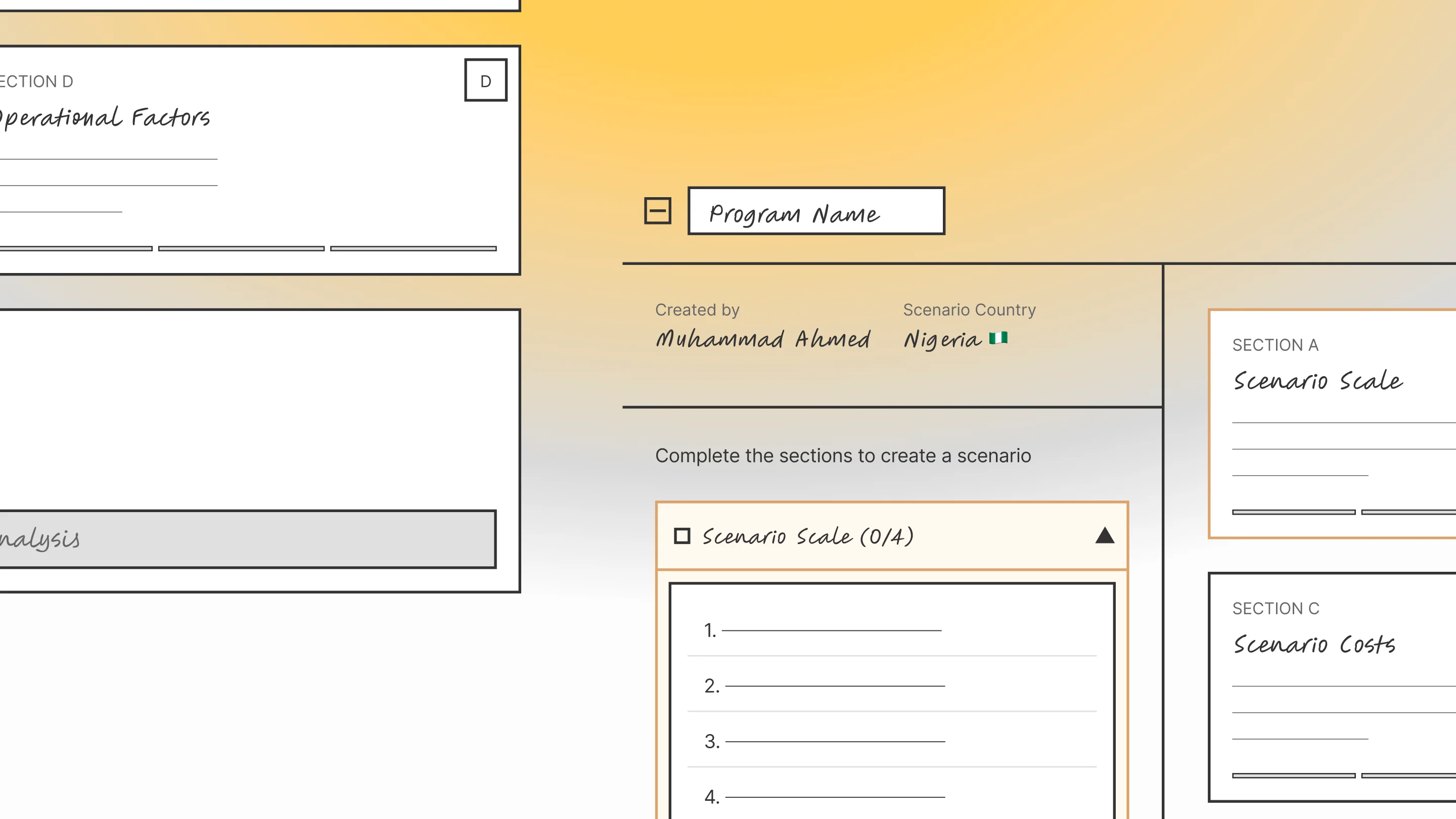
We then designed low fidelity prototypes based on successful concepts. These prioritized sections of the user journey that either previous solutions did not address or we were the most uncertain about. By narrowing the focus of these tests, we were able to respect participants’ time and cognitive capacity. This led to engaged and productive sessions.
Iterating Potential Solutions to Core Challenges and Exploring User Interface Design
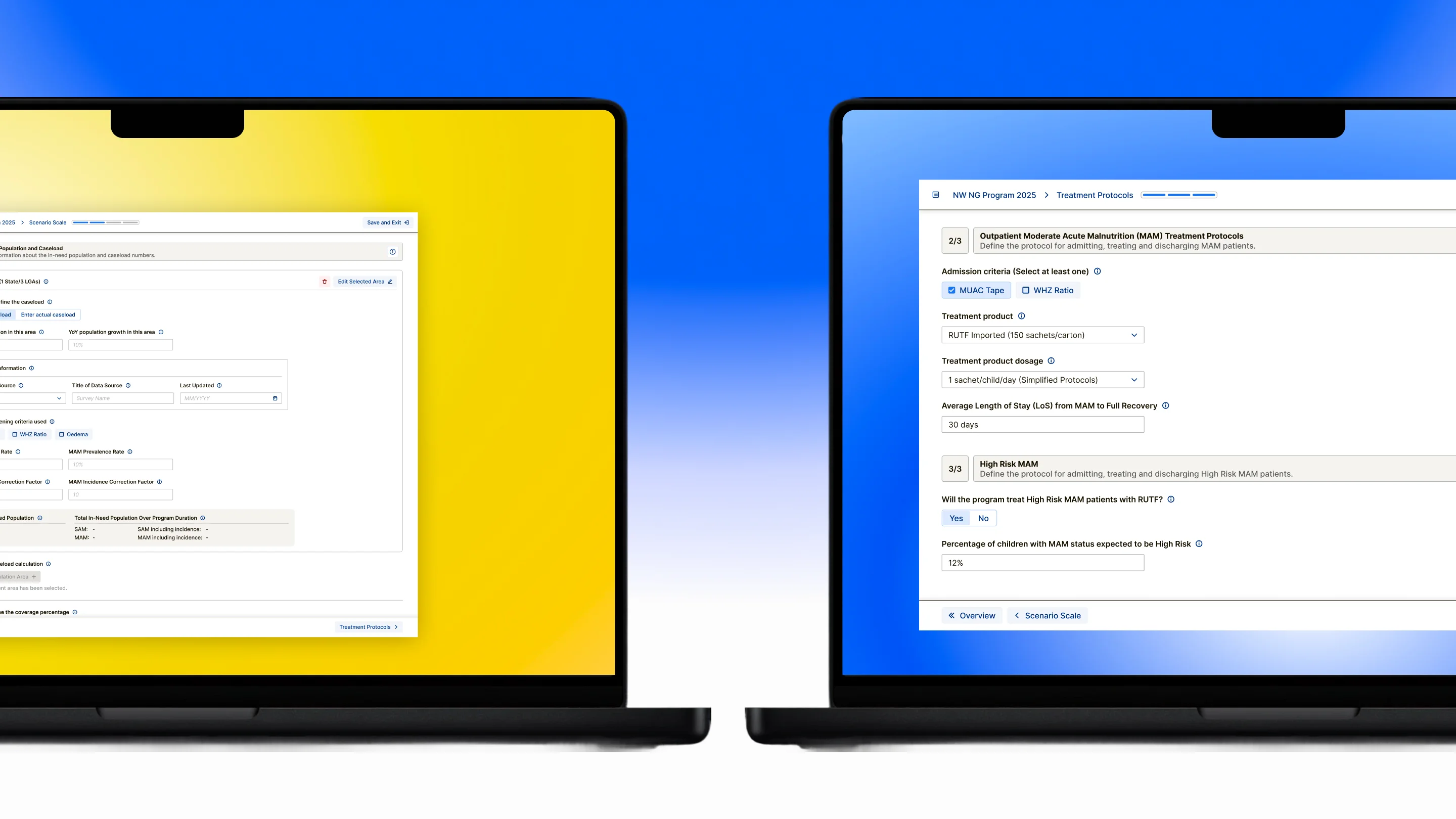
Testing our prototypes hands on with users led to more accurate feedback on the viability of our solutions. We then made iterations that consolidated our learnings and explored feasible alternatives where required before the next testing phase. This time we increased the fidelity of our prototypes, simultaneously developing the visual design of the user interface.
In order to make testing easier for users to make more efficient use of their time, we selected areas of the user journeys that would address our core challenges as well as cover the broadest UX patterns so that we can simultaneously assess the usability and accessibility of our user interface design.
Stakeholder Workshops, Documentation & Design Handoff
With our proposed solutions validated and having an understanding of the user interface requirements as well, we fleshed out the user journey end-to-end and held in-person workshops. These workshops had representation from all stakeholders and user types. This allowed us to have a focused and engaged test of the entire product design from all required perspectives, which provided us with the final feedback we needed to reach a deliverable design that could be handed off for development.
Collaborating with the development team in Portland, Oregon, Ideate Innovation provided remote design support to ensure accurate translation of the design and also assist with any design requirements that came up during the development process.
There is a beta testing stage after development, before v1.0 of the tool will be launched for a pilot program with partners across the globe in malnutrition affected countries.
The Outcome
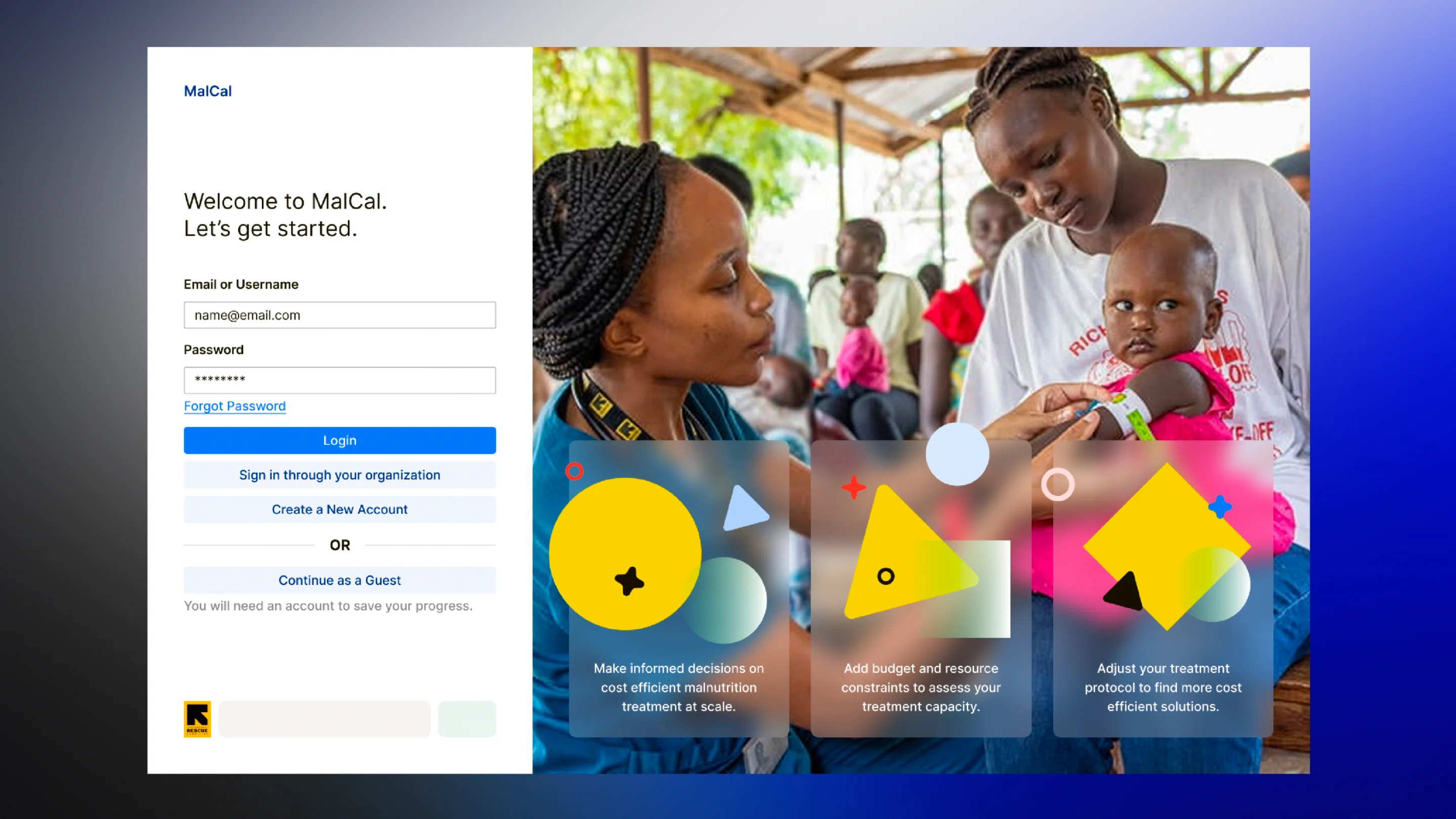
A user-friendly web app for malnutrition treatment planning that allows users to preemptively gauge the cost efficiency of their treatment programs with a data informed approach. We delivered an end to end product design service including user research, product strategy, usability testing, development support and final design delivery and pilot support. The deliverable included considerations for accessibility and scalability through a comprehensive UI library. The final product achieves an ideal balance between ease of use and flexibility. It enables these costing approaches being accessible to more people, ultimately improving treatment delivery for malnourished children around the world while also maintaining enough flexibility for users to tailor inputs according to their needs and unique contexts, allowing for broader impact and also sustainability in terms of maintenance for the product owners.

Previous case study

Next case study

