Building Scalable Cashless Ecosystems
Building Scalable Cashless Ecosystems
Karandaaz and partners digitize housing societies to pioneer cashless ecosystems in Pakistan.
Karandaaz and partners digitize housing societies to pioneer cashless ecosystems in Pakistan.


Client
Karandaaz
Industry
Fintech
Location
" width="24px"><path d="M 0 0 L 21.331 0 L 21.331 18 L 0 18 Z" fill="transparent" height="18px" id="ADXjbn36A" transform="translate(1.334 0)" width="21.331249999999983px"/><path d="M 0 0 L 24 0 L 24 18 L 0 18 Z" fill="rgb(12, 89, 11)" height="18px" id="QuOfLCPVR" width="24px"/><g fill="transparent" height="7.430439090319201px" id="bsmFJADek" transform="translate(9.696 5.344)" width="7.257263078382066px"><path d="M 2.563 1.962 L 1.588 1.756 L 1.075 2.609 L 0.969 1.622 L 0 1.397 L 0.906 0.991 L 0.822 0 L 1.491 0.738 L 2.406 0.35 L 1.909 1.212 L 2.566 1.962 Z" fill="rgb(255, 255, 255)" height="2.609374999999999px" id="UQpX_saKz" transform="translate(4.326 0.737)" width="2.565624999999997px"/><path d="M 7.254 5.219 C 6.835 6.136 6.067 6.849 5.121 7.197 C 4.174 7.546 3.127 7.502 2.214 7.075 C 1.295 6.65 0.582 5.878 0.233 4.928 C -0.115 3.977 -0.072 2.928 0.354 2.009 C 0.782 1.056 1.592 0.326 2.585 0 C 2.457 0.107 2.334 0.221 2.217 0.341 C 0.949 1.744 1.022 3.899 2.381 5.214 C 3.74 6.529 5.896 6.531 7.257 5.219 Z" fill="rgb(255, 255, 255)" height="7.430439090319201px" id="hLARHzTqO" transform="translate(0 0)" width="7.257263064128796px"/></g><path d="M 0 0 L 6.016 0 L 6.016 18 L 0 18 Z" fill="rgb(255, 255, 255)" height="18px" id="ptTMOVuTH" width="6.015625px"/></g></svg>)
Pakistan
Budget
$32,000
Services offered
User Experience Research Insights
Client
Karandaaz
Industry
Fintech
Location
Pakistan
Budget
$32,000
Services offered
User Experience Research Insights
The Challenge
In response to Pakistan’s growing digital financial services (DFS) appetite, Karandaaz Pakistan sought to explore the potential for entirely cashless ecosystems in select communities. Karandaaz approached Ideate Innovation to lead the research, identify suitable ecosystems, and develop strategies for DFS integration and behavior change within that ecosystem. Housing societies presented a unique challenge and opportunity due to their variability in transactions and diverse consumer segments. The goal was to assess the feasibility and impact of digitizing payment touchpoints like utility bills, grocery purchases, school fees and community expenses. Our research focused on understanding residents' financial needs, identifying opportunities to reduce cash dependency, and developing a scalable model for future DFS adoption in similar ecosystems. This groundwork laid the foundation for a pilot program that Karandaaz is now rolling out with its implementing partners, Askari Bank and Digital Miles.
The Work
Clients feedback
Ideate helped us turn research on residents, merchants, and housing-society payments into a practical roadmap for a scalable cashless ecosystem.
The Work
Clients feedback
Ideate helped us turn research on residents, merchants, and housing-society payments into a practical roadmap for a scalable cashless ecosystem.
Pilot Site for Cashless Ecosystem
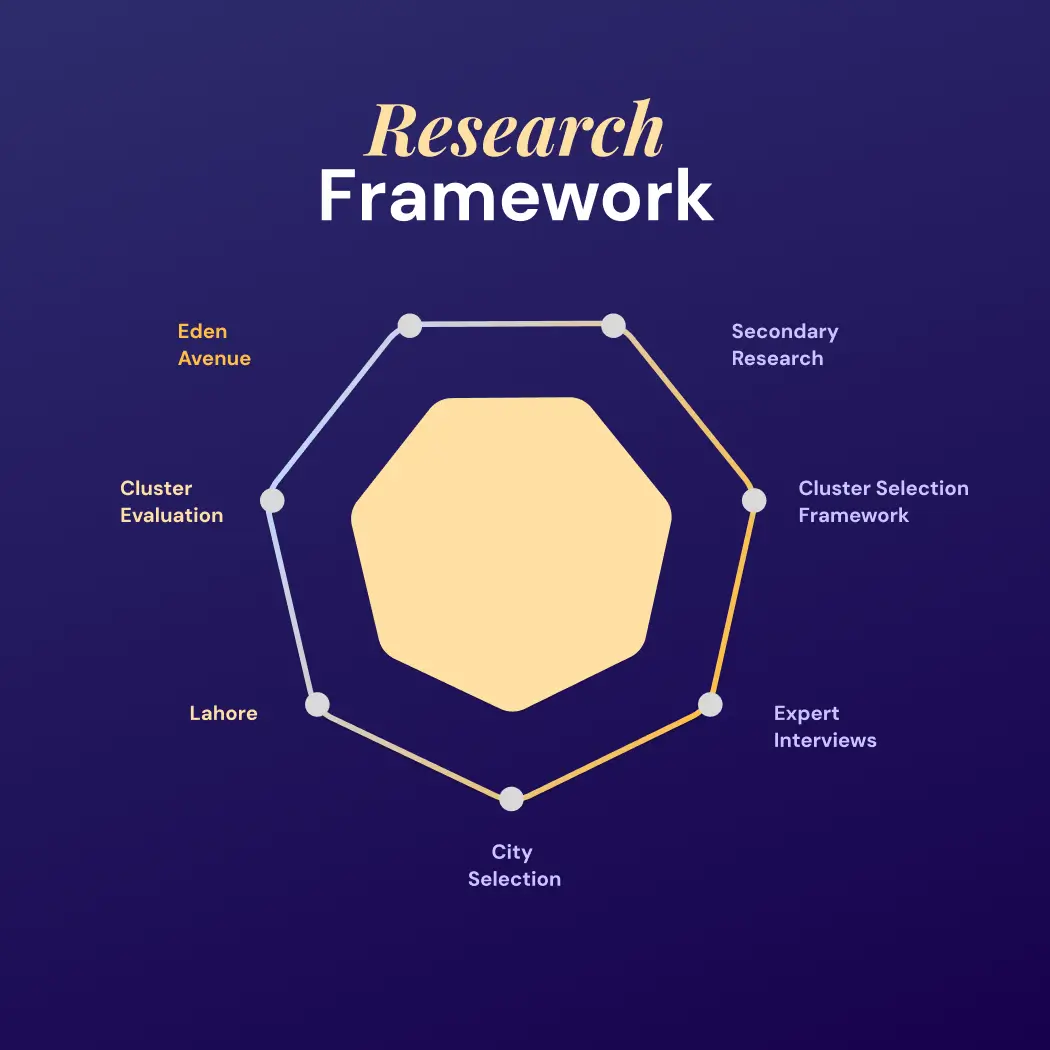
Through comprehensive research and expert consultations, Ideate went through a process of analyzing the suitability of housing societies, university campuses, office complexes and shopping malls, as potential sites for implementing a cashless ecosystem. Through our learnings, we identified Eden Avenue, a housing society in Lahore, as an optimal pilot location. This selection was based on factors such as residents’ strong tech and financial literacy, lack of on-site banking services, high number of use-cases to be digitized and potential for scalability.
Understanding Residents’ Needs and Barriers
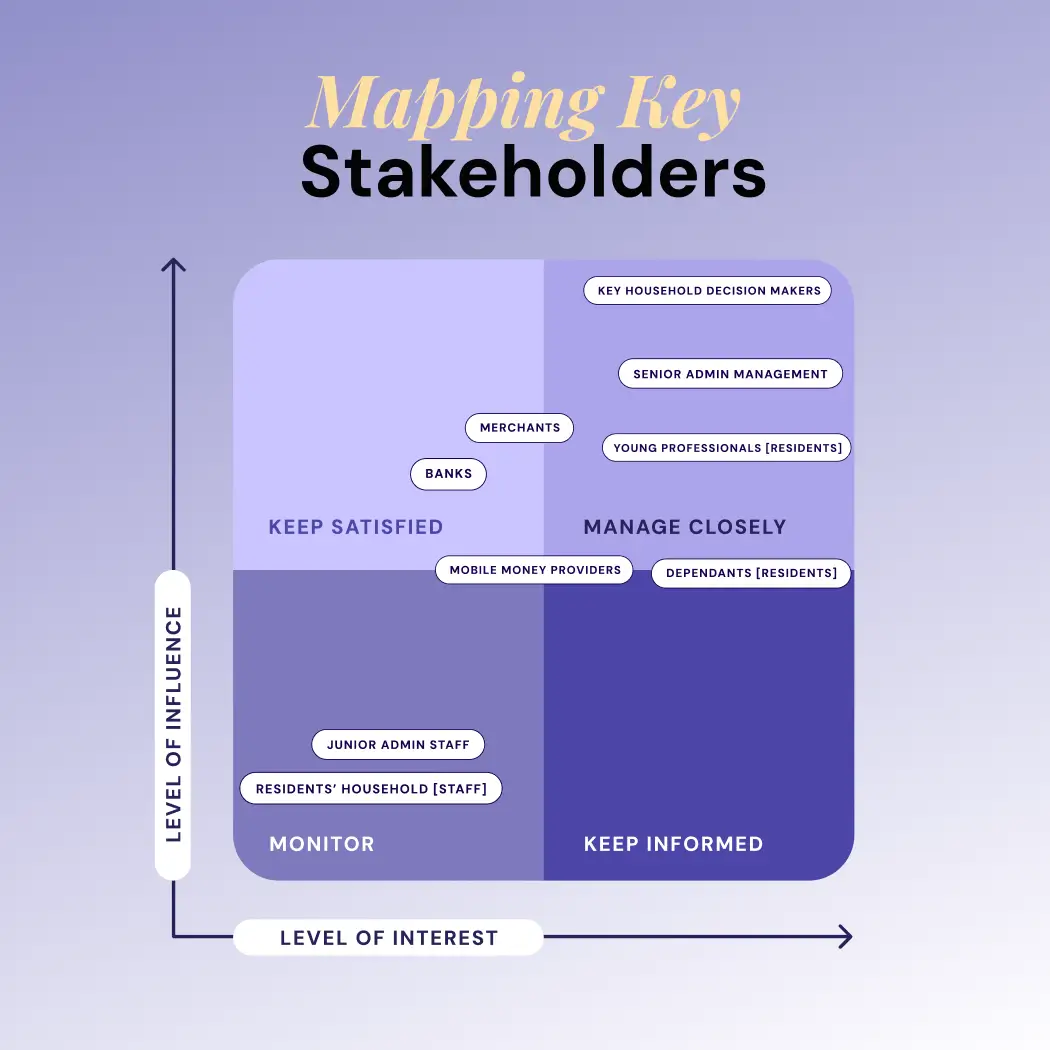
We conducted stakeholder interviews, surveys, and focus groups, engaging directly with residents, merchants, and society administrators. This helped us understand existing payment behaviors, challenges, and residents’ openness to digital financial services.
Key insights included:
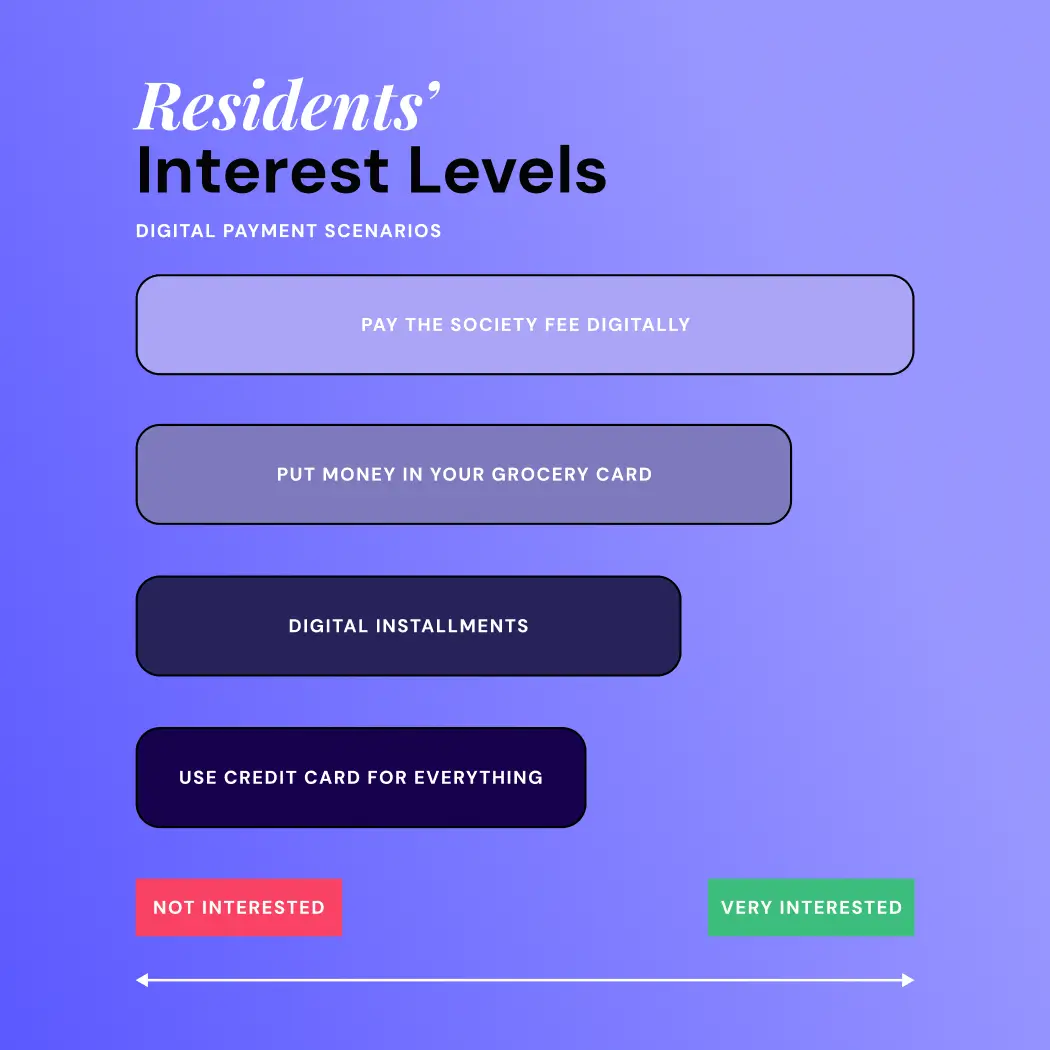
High Tech Literacy and Interest in Digital Payments: Many residents were open to DFS, especially for use-cases like society fee payments and utility bills.
Administrative Challenges: Amid rising costs and a 25% fee default rate, the housing society’s administration is keen to digitize payments to reduce cash handling, lower defaults, and improve access to credit.
Merchant Constraints: Merchants preferred low-cost payment options, yet found mobile money options like JazzCash more acceptable than POS systems due to lower fees.
Prototyping and Testing Payment Solutions
Based on the findings, we recommended and tested various DFS models, focusing on solutions like society fee digitization, onboarding payment aggregators, digital wallets for merchants, and community-focused incentives for digital payments. We also proposed a phased approach to roll out and refine these solutions.
The Outcome
The Outcome
Our insights and recommendations built the framework for a pilot program that promotes digital payments and drives adoption among residents and merchants. This framework proposed: Digital Fee Payments: A streamlined payment option for society fees, with high approval rates among residents and administrators. Merchant-Friendly Payment Systems: Encouraging mobile wallet adoption among merchants, improving transaction ease. Community and Financial Institution Collaboration: Strengthened partnerships between Eden Avenue and financial institutions, paving the way for credit access and improved financial resilience. Tailored Outreach and Communications: Trusted messaging led by Eden Avenue administration to increase resident and merchant buy-in, using targeted channels and messages at each stage of digital adoption. Through this project, we designed a scalable model for cashless ecosystems within housing societies and beyond, contributing valuable insights for similar initiatives across Pakistan.
Our insights and recommendations built the framework for a pilot program that promotes digital payments and drives adoption among residents and merchants. This framework proposed: Digital Fee Payments: A streamlined payment option for society fees, with high approval rates among residents and administrators. Merchant-Friendly Payment Systems: Encouraging mobile wallet adoption among merchants, improving transaction ease. Community and Financial Institution Collaboration: Strengthened partnerships between Eden Avenue and financial institutions, paving the way for credit access and improved financial resilience. Tailored Outreach and Communications: Trusted messaging led by Eden Avenue administration to increase resident and merchant buy-in, using targeted channels and messages at each stage of digital adoption. Through this project, we designed a scalable model for cashless ecosystems within housing societies and beyond, contributing valuable insights for similar initiatives across Pakistan.