Case Study
Designing a Malnutrition Treatment Budget Tool
The International Rescue Committee partnered with Ideate Innovation to design a user-friendly web app for malnutrition treatment planning.

Overview
Client
International Rescue Committee
Industry
Public Health
Services
Digital Product Design
Usability Research
Beta Testing
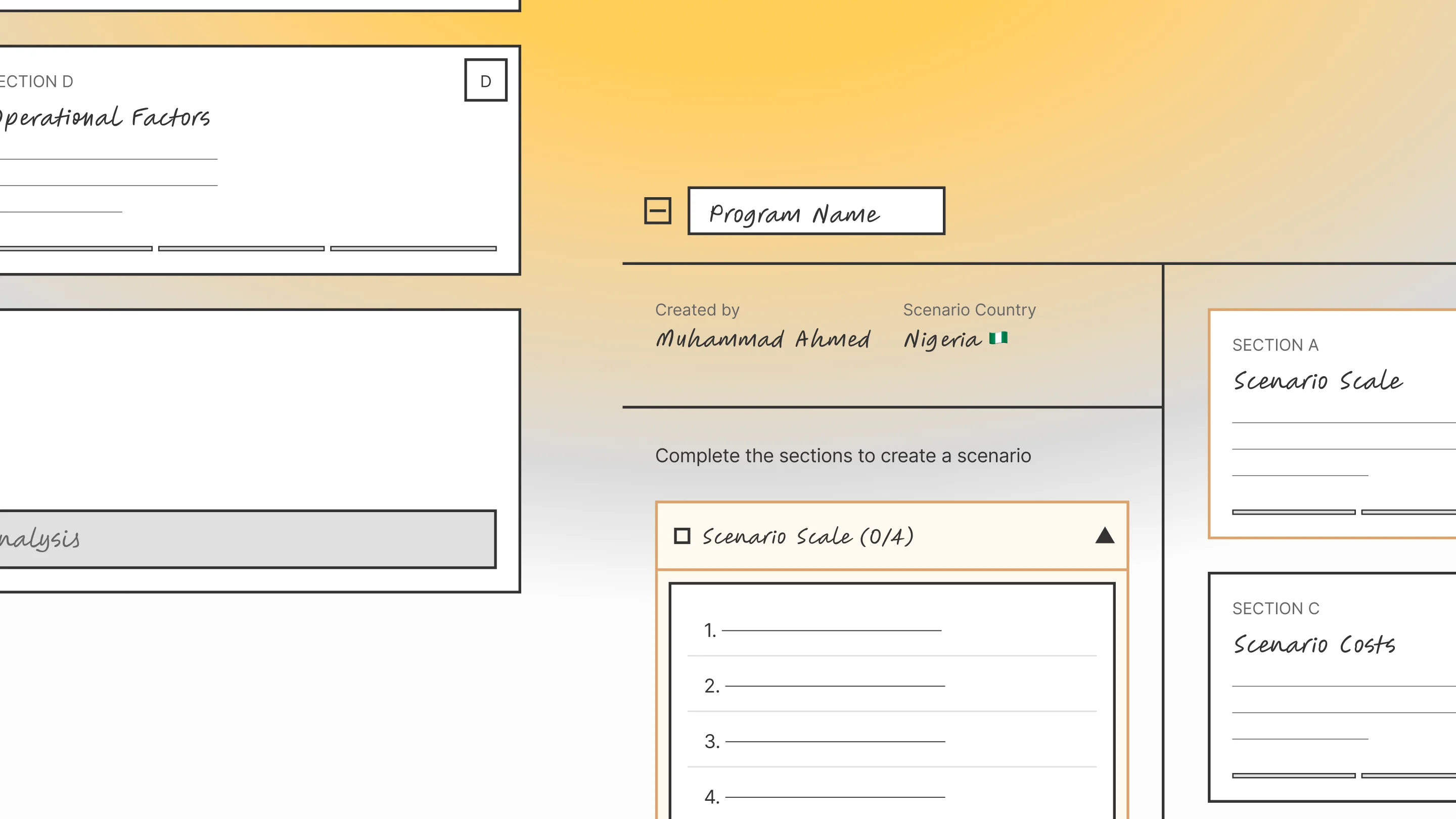
Malnourishment amongst children remains one of the most pressing, complicated, and underfunded issues in the developing world, demanding that resources be used efficiently. While existing data methods can support malnutrition treatment by allowing programs to preemptively gauge cost efficiency, these often require expensive and difficult-to-access knowledge and expertise in every context. The International Rescue Committee (IRC) set out to explore if the process of budgeting and gauging cost efficiency could be made more intuitive and accessible. They sought a user-friendly web app with a guided experience that could package this expert knowledge, reducing the barrier to entry and allowing governments, funding organizations, and implementers worldwide to take advantage of these methods. The key design challenge was enabling users to model and compare different scenarios for cost efficiency while balancing the need for flexibility across contexts (like Pakistan and Nigeria) with the requirement for a guided experience.
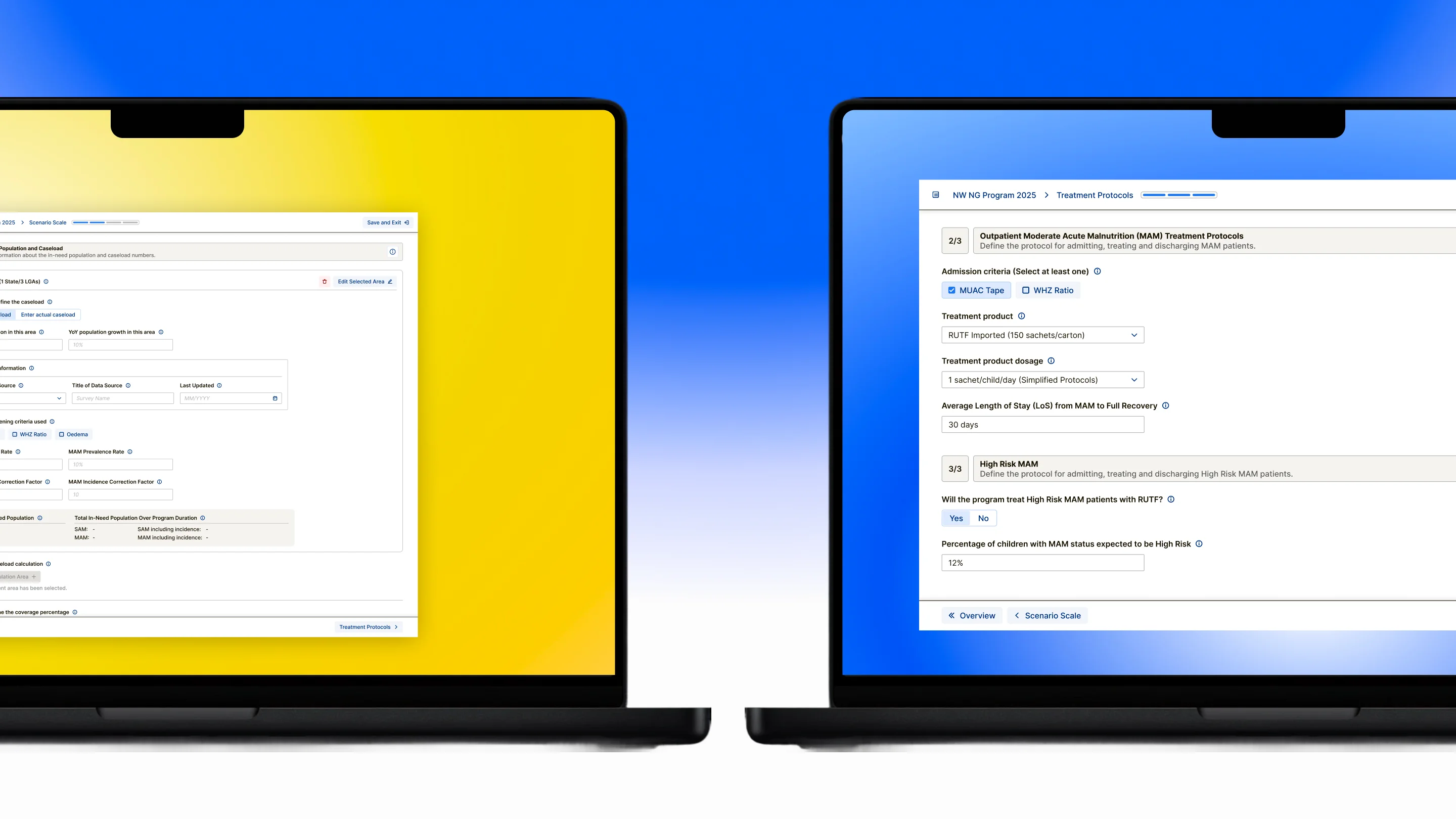
We started by immersing ourselves in the literature and leaning on global malnutrition experts at the IRC. We spoke to stakeholders in Pakistan and Nigeria to deeply understand the contextual nuances, which helped us identify crucial user needs that the initial prototype was not accommodating. Considering these insights, we built sacrificial concepts to test alternatives for the user journey and logic. This helped us quickly align on a consensus regarding the product’s scope, balancing the needs of all stakeholders. We then designed low-fidelity prototypes based on the successful concepts, prioritizing sections of the user journey where we were most uncertain. By narrowing the focus of these tests, we respected participants’ time and cognitive capacity, leading to highly engaged and productive sessions.
Refining the core logic and interface
Testing our prototypes hands-on led to accurate feedback on solution viability. We made iterations that consolidated our learnings and explored feasible alternatives before the next testing phase. For this stage, we increased the fidelity of our prototypes while simultaneously developing the visual design of the user interface. We selected test areas that not only addressed our core challenges but also covered the broadest UX patterns. This allowed us to efficiently assess the usability and accessibility of our user interface design alongside the core logic refinement.
Finalizing the experience and handoff
With our proposed solutions validated and the user interface requirements defined, we fleshed out the user journey end-to-end. We conducted in-person workshops in both Pakistan and Nigeria with representation from all stakeholder groups and user types. This focused evaluation of the full product design provided the final round of feedback needed before the development phase.Collaborating with the development team in Portland, Oregon, Ideate Innovation provided remote design support to ensure the accurate translation of the design and assist with any requirements that arose during development.
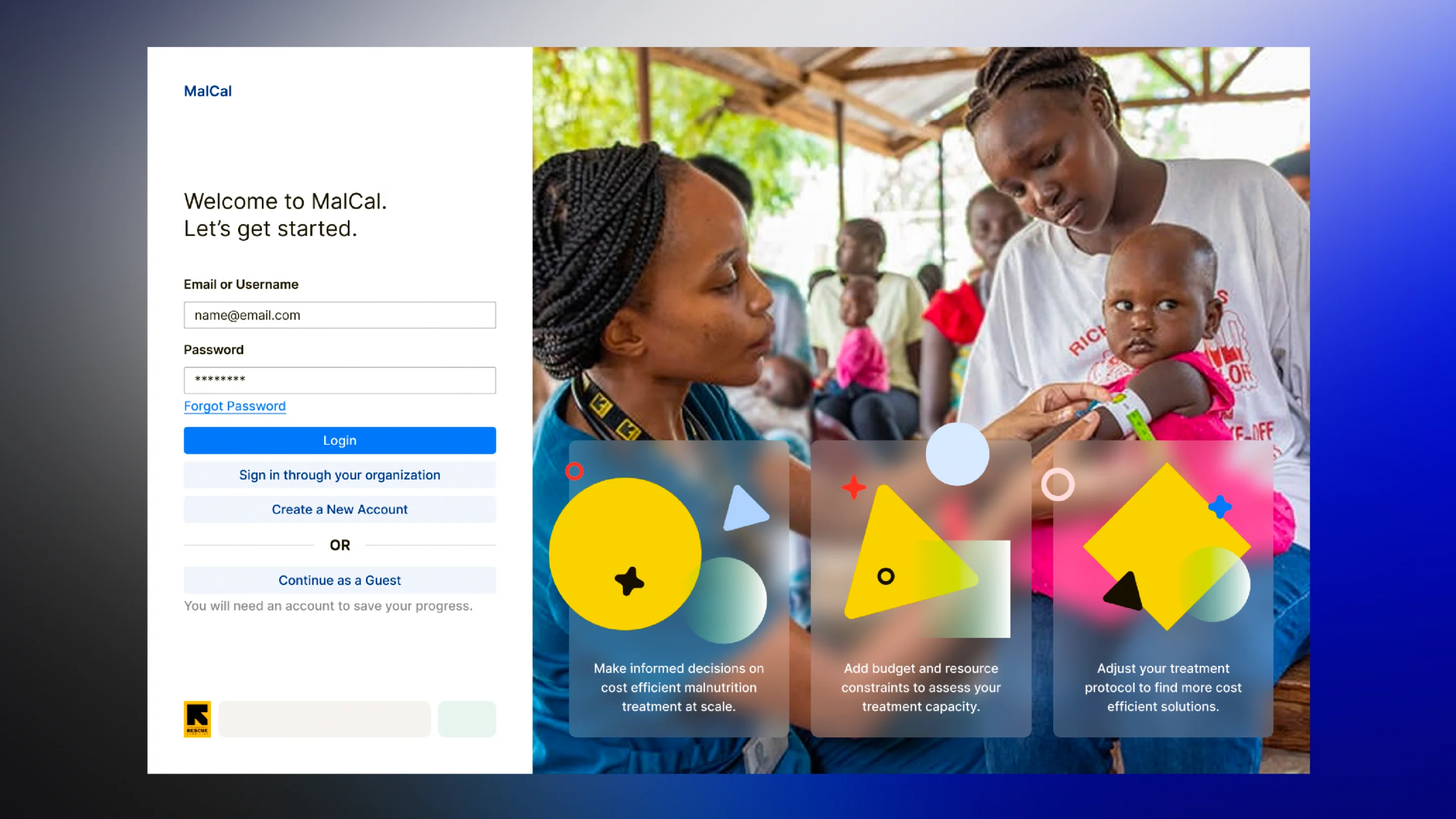
We delivered an end-to-end product design service (including research, strategy, usability testing, and development support) resulting in a user-friendly web app for malnutrition treatment planning. This tool allows users to preemptively gauge the cost efficiency of their treatment programs with a data-informed approach. The deliverable includes a comprehensive UI library that ensures accessibility and scalability. The tool has since been launched as SCALE — Scenario Costing and Analysis for Large-scale Efficiency in Nutrition — helping ministries of health and humanitarian partners make smarter, evidence-based decisions about how to fight malnutrition. SCALE shows what different treatment protocols cost, how many children they can reach, and how to maximize impact within tight budgets by transforming complex cost modeling into an intuitive, open-access tool.